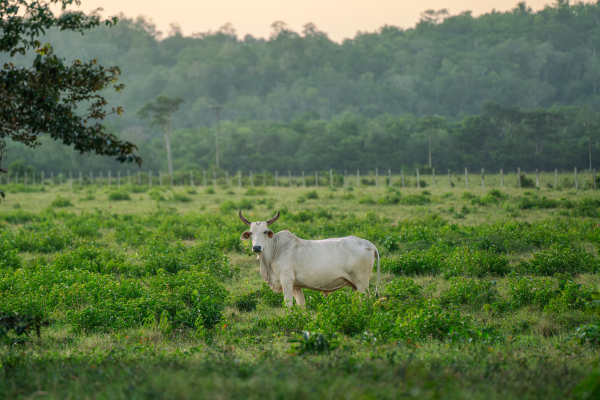
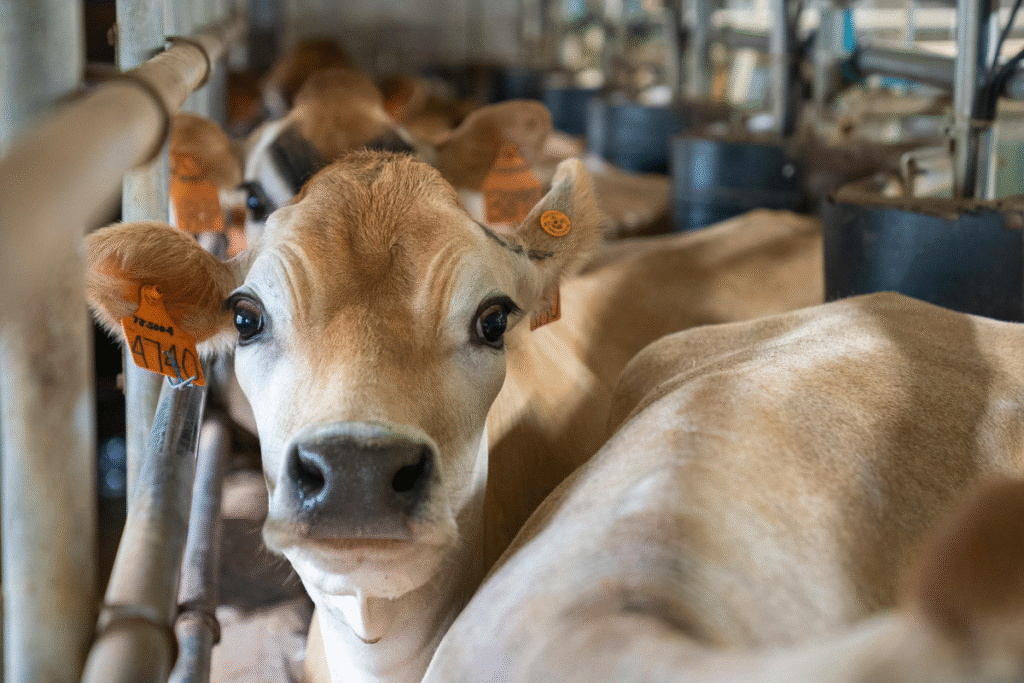
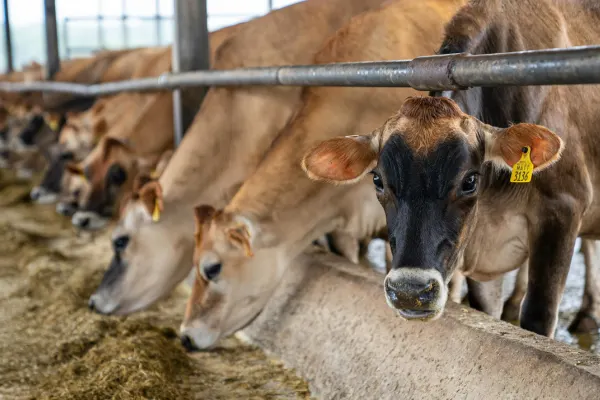
A2 milk has gained increasing attention for its natural composition and digestibility. However, the story of A2 milk does not begin at the dairy shelf. It begins with the indigenous cattle breeds that naturally produce A2 beta-casein milk. Breeds such as Gir, Sahiwal, Tharparkar, Red Sindhi, Rathi, Kangeyam, Ongole, and Kankrej have evolved over centuries, adapting to local climates, forage availability, and low-input farming systems. These cattle are genetically distinct from crossbred or exotic dairy animals. Their physiology, digestive systems, and metabolic responses are aligned with survival and resilience rather than high production. When managed
under modern dairy systems, this genetic advantage often turns into a challenge.
Genetic Uniqueness of Indigenous A2 Cattle:
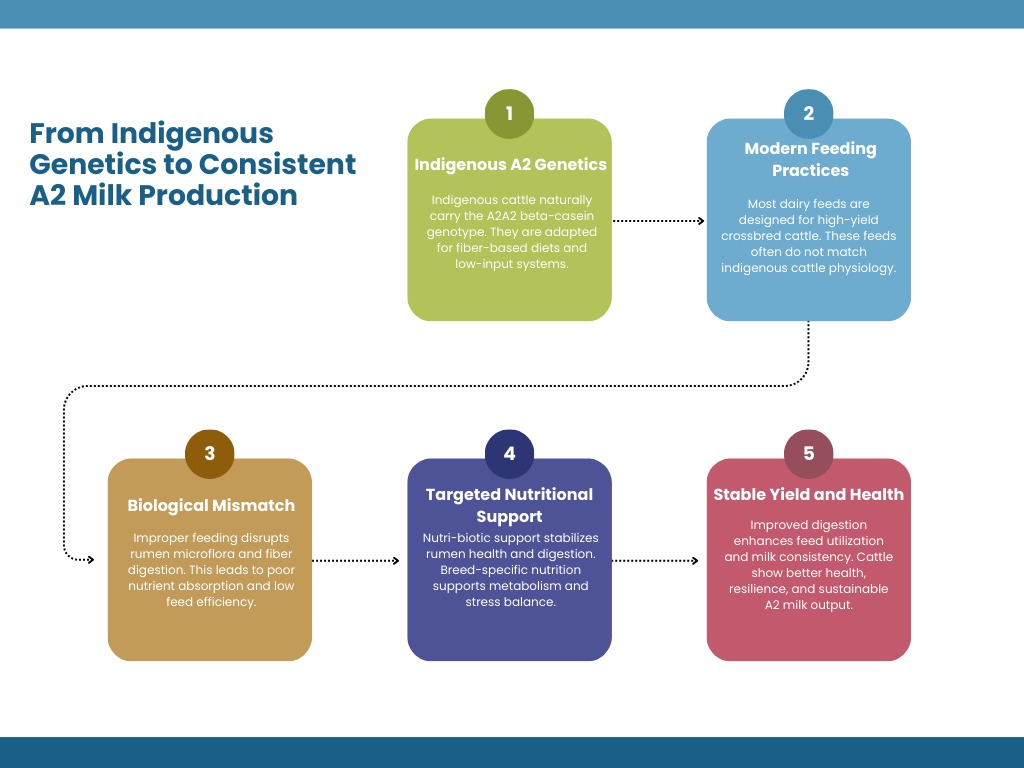
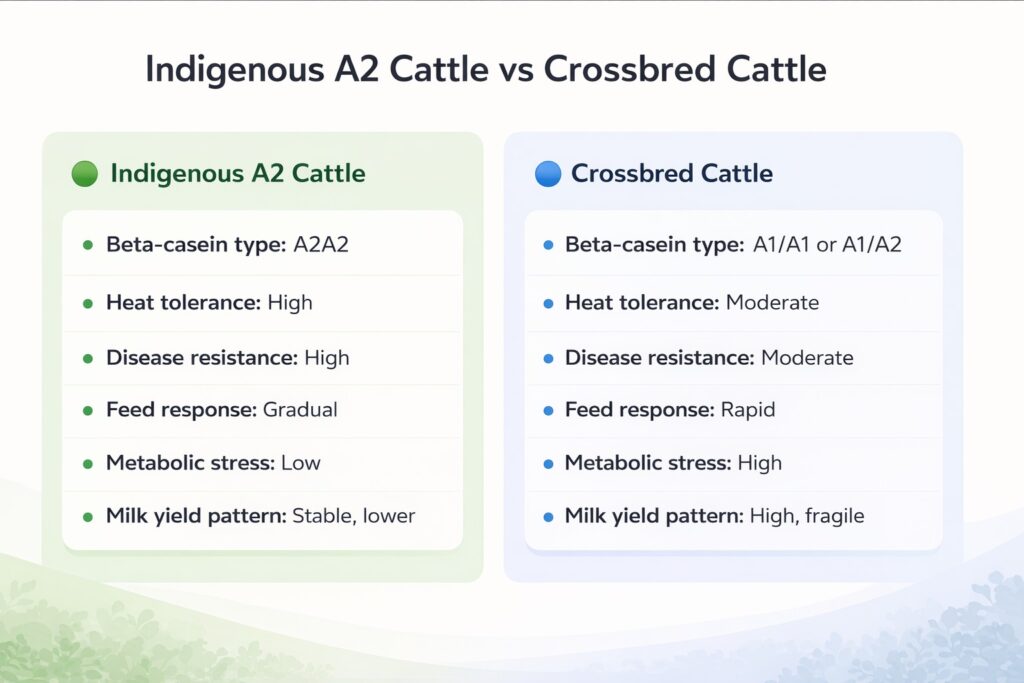
Indigenous cattle predominantly carry the A2A2 beta-casein genotype, meaning they naturally produce milk containing only A2 beta-casein. Unlike crossbred cattle, this trait does not require selective breeding or genetic intervention.
In addition to milk protein genetics, these breeds show:
– High heat tolerance
– Strong disease resistance
– Lower metabolic stress under harsh environments
However, these strengths are paired with lower peak milk yield and a slower metabolic rate, which makes their nutritional requirements fundamentally different from high-yielding crossbreds.
Comparison between Indigenous A2 Cattle and Crossbred Cattle
Why Modern Dairy Systems Challenge Indigenous A2 Cattle:
Most modern dairy feeding programs are designed around crossbred cattle with high milk output. These systems emphasize high-energy concentrates and rapid nutrient conversion. When applied to indigenous cattle, a biological mismatch occurs. Indigenous cows are efficient survivors but poor responders to forced productivity systems. The result is not improved yield but compromised digestion, stress, and inconsistent milk output.
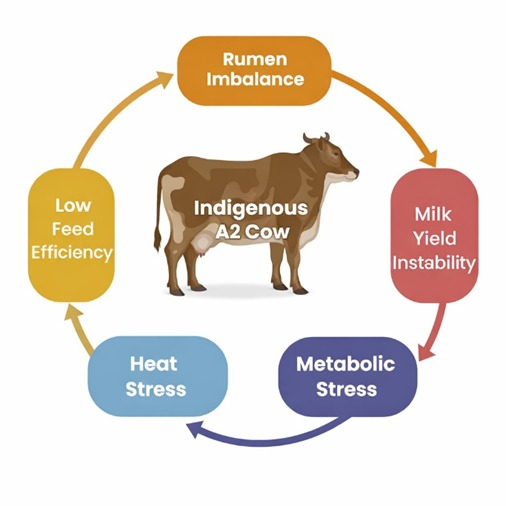
Key problems faced by indigenous A2 cattle:
Digestive and Rumen Imbalance:
Indigenous cattle evolved on fiber-rich forage diets. Sudden exposure to energy dense feeds disrupts rumen microbial balance.
This leads to:
– Inefficient fiber breakdown
– Reduced rumination
– Poor volatile fatty acid production
As a result, nutrients present in the feed are not fully utilized.
Low Feed Efficiency Despite Adequate Intake:
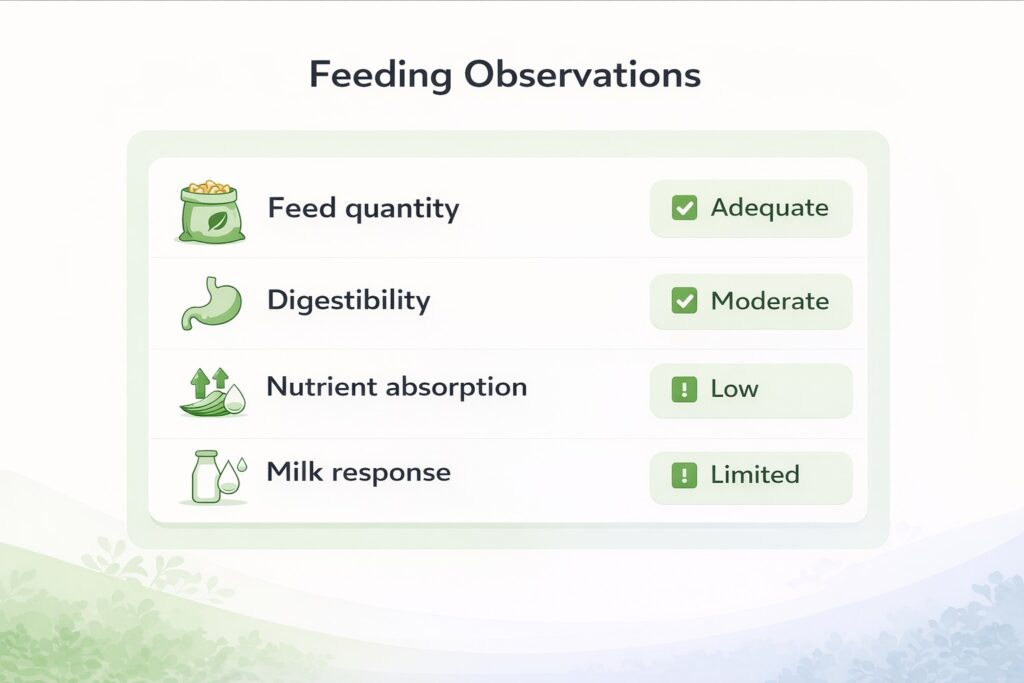
In many cases, indigenous cows consume sufficient feed but fail to convert it effectively into milk. This is due to:
– Suboptimal microbial activity
– Poor mineral absorption
– Inefficient nutrient partitioning
Feed Intake vs Utilization in Indigenous A2 Cattle
Milk Yield Instability Under Stress:
Indigenous cattle typically show lower peak milk yield, but the bigger issue is yielding instability. Minor stressors such as heat, feed change, or gut disturbance can cause sudden drops in milk production. Unlike crossbreds, recovery is often slow.
Metabolic and Oxidative Stress During Lactation:
Early lactation places significant metabolic pressure on indigenous cows. Negative energy balance, oxidative stress, and immune suppression are commonly observed, especially when nutrition does not support their slower metabolism. Over time, this affects productivity and reproductive performance.
Heat Stress and Environmental Load:
Although indigenous breeds are heat tolerant, modern housing conditions and high humidity reduce feed intake and rumination time. This indirectly worsens gut health and milk output.
Understanding the Biological Needs of Indigenous A2 Cattle:
The challenges faced by indigenous A2 cattle are interconnected. Digestive health, feed efficiency, metabolic stability, and environmental stress all influence milk production. Addressing one factor in isolation is rarely effective.
Role of Nutri-Biotic Support in Indigenous Cattle Nutrition:
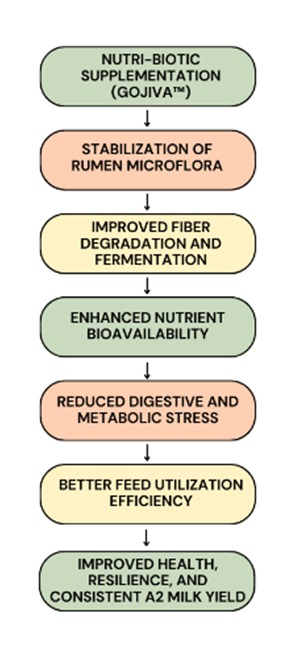
Supporting rumen health is central to improving performance in indigenous cattle. Nutri-biotic interventions focus on stabilizing rumen microflora, improving fiber digestion, and enhancing nutrient bioavailability. This biological support helps reduce digestive stress and improves feed utilization without forcing productivity.
Need for Breed-Specific Nutrition in Indigenous A2 Cattle:
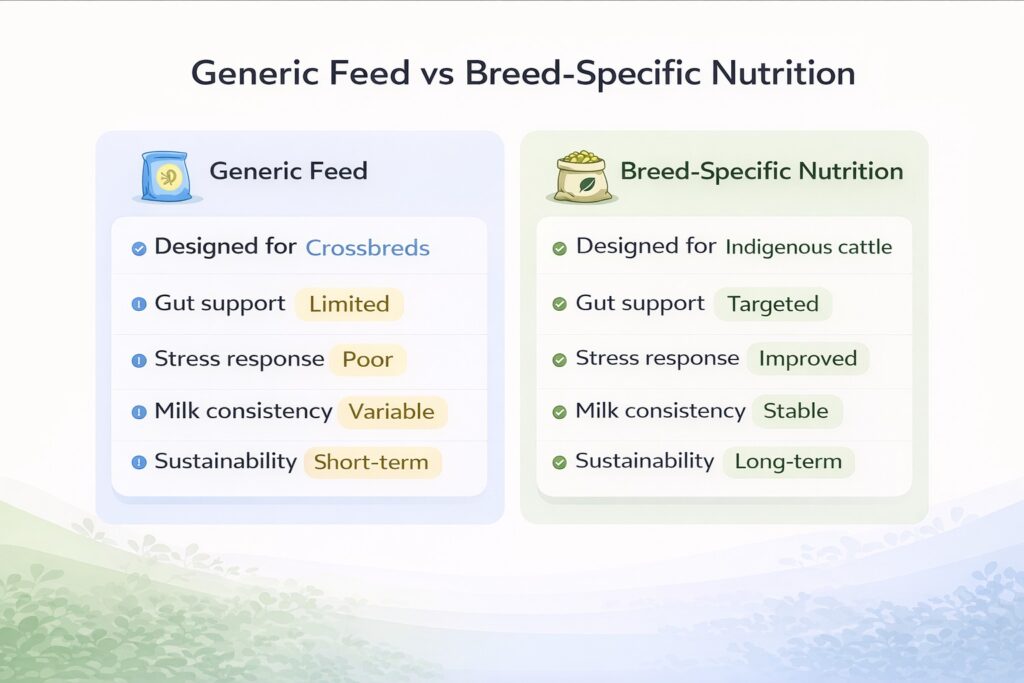
Generic dairy feeds are formulated for rapid energy conversion and high milk yield. Indigenous cattle require nutrition that aligns with their genetic makeup, slower metabolism, and digestive physiology. Breed-specific feeding supports long-term health, stable production, and sustainability rather than short-term yield spikes.
Generic Feeding vs Breed-Specific Nutrition
GOJIVA™: Strategic Nutritional Support for Indigenous A2 Cattle:
Indigenous A2 cattle require nutritional support that improves digestion and feed utilization without placing stress on their metabolism. GOJIVA™ acts as a targeted Nutri-biotic intervention by stabilizing rumen function, enhancing nutrient absorption, and improving feed conversion efficiency. This helps indigenous cows utilize feed more effectively, supporting consistent milk production and better overall animal health. When combined with GOJIVA™ SUPREME, a specially formulated feed designed for the unique digestive and metabolic needs of indigenous cattle, this nutrition strategy provides the special care required for optimal performance. Together, GOJIVA™ and GOJIVA™ SUPREME support stable milk yield, improved feed efficiency, and long-term sustainability in A2 dairy farming systems.